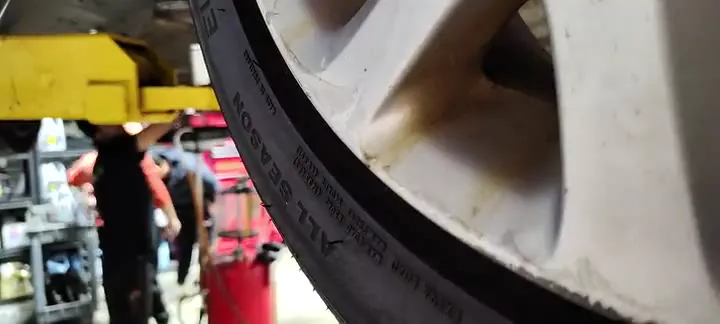

How much is a tire changeover in St. Catharines?
It depends on whether your seasonal tires are already on their own rims. A swap on rims is the quicker, lower-cost job; a mount and balance costs more because each tire comes off the rim and every wheel is balanced. Both include the checks listed below.
Prices are not published online yet. Call 905-348-4020 with your vehicle or tire size for today's price.
How long does a tire swap take?
About 30 minutes if your seasonal tires are already on rims, and about 60 minutes if we have to mount and balance them. Most customers wait on site.
Do I need an appointment?
No, walk-ins are welcome whenever a bay is free. In peak season (mid-October to December, and April) we recommend booking so you are not waiting behind the first-snow rush.
Shortest waits are usually weekday mornings and mid-afternoon. Evenings and Saturdays fill first.
What is the difference between a swap on rims and a mount and balance?
A swap on rims means your seasonal tires already sit on their own wheels, so we just change the wheels. A mount and balance means we remove tires from the rims, fit the other set and balance each wheel.
If you change over twice a year, a second set of rims usually pays for itself. See winter packages on rims.
What's included
- 01Tread and sidewall inspection on both sets
- 02Pressure set to your door-jamb placard
- 03Wheel nuts torqued to specification
- 04TPMS check and sensor relearn if your warning light comes on
Changeover plus storage
Leave the off-season set with us and skip hauling tires twice a year. The package covers the swap and a season of storage, booked in one visit.
How tire storage worksWhen does each season start?
- Fall
- Late October to mid-November, once days stay below about 7 °C (a guideline)
- Spring
- Mid-April to May, once days stay above about 7 °C
Which tire service do I actually need?
These get mixed up, but they're different jobs with different prices. Each one below has its own scope.
Seasonal changeover
Swapping your winter and summer sets twice a year (wheels only if they're on rims, or a mount and balance if not).
Signs: the season is changing. Booking: walk-in; book ahead in peak season. Confirmed
Tire installation
Mounting and balancing new tires on your rims, with new valve stems and disposal of the old set.
Signs: worn or damaged tires. Booking: call with your size; if tires were bought elsewhere, call to confirm. Confirmed
Tire balancing
Spinning each wheel on a balancer and adding weights so it turns smoothly. It fixes vibration, not pulling.
Signs: steering-wheel or seat shake at highway speed. Booking: walk-ins welcome. Confirmed
Tire rotation
Moving tires between positions so the set wears evenly. It doesn't fix a vibration or a pull. See rotation patterns.
Signs: front and rear tread wearing at different rates. Booking: per your owner's manual interval; easy to add to a changeover. Usually available
TPMS relearn
Teaching the car to recognize the sensors already in your wheels. No parts are replaced.
Signs: warning light after a tire or wheel change. Booking: walk-ins welcome; procedure depends on the vehicle. Confirmed
TPMS sensor replacement
Fitting and programming a new sensor when one has a dead battery or is damaged, then a relearn.
Signs: a system-fault warning that a relearn doesn't clear. Booking: call to check we have a compatible sensor. Call to confirm
Wheel alignment
Adjusting wheel angles to the manufacturer's specification. It fixes pulling and edge wear, not vibration.
Signs: car pulls, crooked steering wheel. Booking: see wheel alignment. Call to confirm
Brakes, suspension and inspections
Brake, suspension and vehicle inspection work isn't listed as a confirmed service. If you notice a problem, describe it when you call.
Booking: call before you come in. Call to confirm
Balancing
Why does my steering wheel shake at highway speed?
Most often a wheel is out of balance from a lost weight, a new tire, or uneven wear. The shake usually starts between 90 and 110 km/h and fades above or below that speed.
If it shakes only when braking, it's more likely the brake rotors (brake service: call to confirm). If the car pulls instead, it's usually alignment (call to confirm availability). Wear patterns tell you a lot: see why tires wear unevenly.
When do tires need balancing?
Every time a tire is mounted on a rim, after a flat repair, and whenever you feel a new vibration. Balancing four wheels takes about 30 to 45 minutes.
A swap on rims doesn't need rebalancing: balance stays with the wheel. If a vibration appears after a swap or rotation, a weight has likely come off that wheel.
TPMS
Why is my tire pressure light on after a tire change?
Often the car hasn't learned the sensors on the new set yet, or one tire is low. On many direct TPMS systems, a solid light means low pressure and a light that flashes for about a minute then stays on means a system fault. Indirect systems, which use the ABS wheel-speed sensors instead, usually just need a reset.
A fault warning can appear after a tire or wheel change if the relearn isn't done, and the procedure depends on the vehicle. We check pressures and the sensors first. Ask whether we can program a new sensor for your model.
How much does a TPMS sensor cost?
A relearn uses the sensors already in your wheels; a new sensor costs more because the part is replaced and programmed, and the price depends on your vehicle's sensor type. We check we have a compatible sensor before you come in. Sensor batteries typically last around 7 to 10 years (approximate), so older sets often fail together. More in our guide to the TPMS warning light.
If your car has direct TPMS, winter wheels without compatible sensors will usually keep the warning on all season. Sensor fit depends on the sensor type, valve and wheel; ask our counter team when you buy a winter package on rims.
Add an oil change to the same visit
Your car is already on the lift. Ask for an oil change and a battery test with your fall changeover, completing your winter preparation in a single visit.